
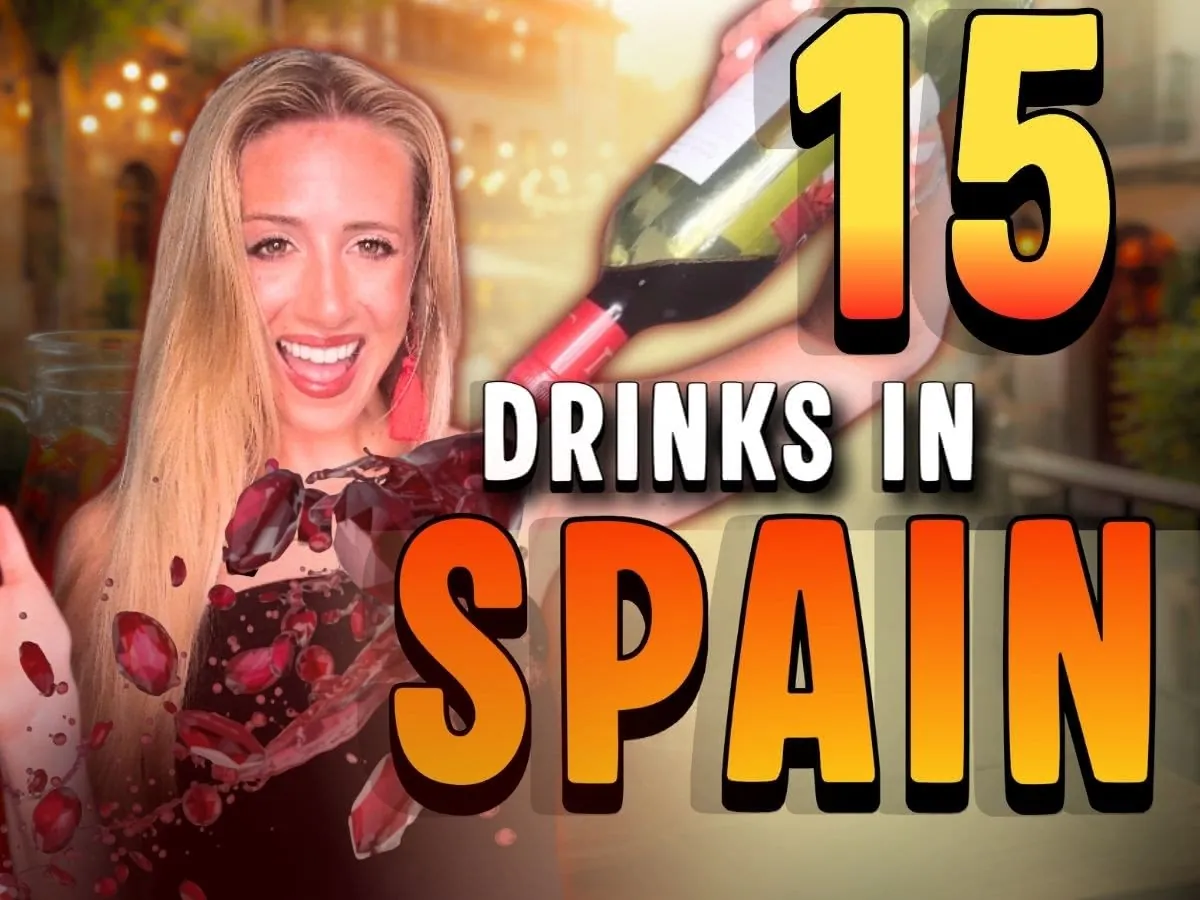
Spanish drinks are a big part of Spanish culture in a sophisticated and social way. Spanish culture is social, warm, and doesn’t take life too seriously. Connection, living in the moment, and authenticity are priorities, and Spanish drinks often give people a reason to gather throughout the day from coffee breaks to late-night conversations that stretch for hours.
Spaniards enjoy wine, coffee, beer, and cocktails in a refined but relaxed way. There is attention to detail, strong tradition, and a deep sense that drinks are meant to be shared, never rushed.
After living in Spain for two years, these are the Spanish drinks that stood out most to me, not only for their taste, but for the memories tied to them. Here are 15 staple drinks of Spain worth knowing.
1. Queimada

Queimada is a dramatic Galician drink made with aguardiente and sugar that is lit on fire while a spell is recited. I once experienced this unexpectedly at a bar in A Coruña, where a man dressed in straw chanted loudly as flames danced across each cup, an unforgettable moment.
While the ritual has roots in folklore and superstition, I personally view it as cultural theater rather than something spiritual.
- Time of Day: Evening or late-night gatherings.
- Region: Galicia, especially A Coruña and rural areas.
2. Sidra

Sidra from Asturias is nothing like sweet American cider. It is strong, natural, and poured from high above the glass in a theatrical way that fills the air with its sharp aroma. I remember sitting in a restaurant surrounded by the smell of sidra, laughing with friends as it paired perfectly with heavy regional food.
- Time of Day: Lunch or dinner.
- Region: Asturias in northern Spain.
3. Spanish Wine

Wine in Spain is incredibly affordable and deeply woven into daily life. From red wine paired with hearty dishes like callos to crisp white wines served with seafood, wine is always tied to food and community. I loved bringing cheap bottles of wine to the beach in A Coruña and sipping slowly with my roommate Kalei, watching the waves roll in.
- Time of Day: Lunch, dinner, and social gatherings.
- Region: Nationwide, with famous regions like Rioja and Ribera del Duero.
4. Cava

Cava is Spain’s sparkling wine and a staple during celebrations. It’s crisp, refreshing, and often served during holidays, weddings, and New Year’s celebrations. Even casual gatherings sometimes felt elevated when cava appeared on the table.
- Time of Day: Celebrations and special occasions.
- Region: Catalonia, especially near Barcelona.
5. Tinto de Verano

Tinto de verano is one of the most popular Spanish summer drinks, often even more common than sangria among locals. It’s simple, red wine mixed with lemon soda, but incredibly refreshing and easy to afford. I drank plenty of these in Madrid during summers in my mid-20s, surrounded by friends from all over the world.
- Time of Day: Afternoon or evening.
- Region: Nationwide, especially Madrid.
6. Sangria

Sangria is one of the most internationally recognized Spanish drinks, even if locals don’t drink it as often as visitors might expect. It is typically made with red wine, fruit, and sometimes a splash of brandy, giving it a festive and refreshing flavor that feels perfect for celebrations.
While living in Spain, I noticed it appeared more often during social gatherings or in places that welcomed tourists, but it still holds cultural importance and is worth trying at least once.
- Time of Day: Social gatherings, lunch, or celebrations.
- Region: Nationwide.
7. Una Caña

Ordering una caña is the most common way to ask for a small draft beer in Spain. My personal favorite was Estrella Galicia, always served cold and usually accompanied by olives or chips, which somehow made the whole experience feel more refreshing. The smaller size keeps the beer crisp and cold, which is exactly how Spaniards prefer it.
- Time of Day: Lunch, dinner, or tapas time.
- Region: Nationwide.
8. Clara de Limón

Clara de limón is a light beer mixed with lemon soda and is especially popular during hot summer months. I’ll be honest, this is one Spanish drink I never personally loved because the lemon sweetness wasn’t my favorite, but it is incredibly common and widely enjoyed. Many locals order it as a refreshing alternative to heavier beers during long sunny afternoons.
- Time of Day: Afternoon or hot summer days.
- Region: Nationwide.
9. Vermut

Vermut is a full social tradition. People gather before lunch for la hora del vermut, standing around tables and chatting while enjoying small snacks and slow conversation. Even though the flavor wasn’t always my favorite, I loved how social and ritualistic this moment felt and how it brought people together.
- Time of Day: Late morning or before lunch.
- Region: Especially popular in Madrid and Catalonia.
10. Gin and Tonic

Spain has elevated the gin and tonic into something that feels elegant and carefully crafted. They are served in large glasses with fresh garnishes like citrus, herbs, or spices, making them surprisingly refreshing and visually appealing. When going out at night, this was one of the most common drinks I saw ordered again and again.
- Time of Day: Evening and nightlife.
- Region: Nationwide.
11. Carajillo

Carajillo quickly became one of my personal favorite Spanish drinks because it combines strong espresso with liquor, often brandy or Licor 43. It feels cozy, bold, and slightly indulgent, especially after a long meal when everyone is lingering at the table talking. This drink always felt like the perfect ending to dinner and conversation.
- Time of Day: After meals.
- Region: Nationwide.
12. Café con Leche

Café con leche is the most common way to drink coffee in Spain and is deeply tied to daily routine. As teachers, we would gather around 11 a.m. for a small snack and coffee, turning a simple drink into a social ritual that broke up the day. Coffee culture in Spain is less about rushing and more about pausing to connect.
- Time of Day: Morning or mid-morning.
- Region: Nationwide.
13. Zumo de Naranja Natural

Fresh-squeezed orange juice is incredibly common in Spain, especially in regions like Valencia where oranges are abundant. Unlike in the United States, where fresh juice can be expensive and less accessible, Spanish cafés serve it regularly and proudly. The flavor is noticeably brighter, fresher, and more natural than anything that comes from a carton.
- Time of Day: Breakfast.
- Region: Valencia and nationwide.
14. Agua con Gas

Sparkling water is widely consumed in Spain and often served in glass bottles without ice. I fell in love with agua con gas while living there because it felt more refreshing and crisp than still water. It quickly became my go-to drink with meals and something I still prefer today.
- Time of Day: Anytime.
- Region: Nationwide.
15. Cola Cao

Cola Cao is a beloved chocolate drink that many Spanish children grow up drinking daily. While babysitting, I saw how excited kids would get when it was time for their Cola Cao, turning an ordinary moment into something fun and comforting. Even now, thinking about it brings back warm memories of everyday life in Spain.
- Time of Day: Breakfast or afternoon snack.
- Region: Nationwide.
Drinking Culture in Spain
Drinking in Spain is deeply tied to connection rather than excess. People gather over coffee in the morning, wine at lunch, vermut before meals, and cocktails in the evening. The day unfolds around shared moments, not rushed schedules.
Unlike many places, alcohol is rarely consumed without food. Even beer is often served alongside small snacks like olives or chips, reinforcing the idea that drinks are part of a larger social experience rather than the center of attention.
What Is the Legal Drinking Age in Spain
The legal drinking age in Spain is 18 years old, which applies to purchasing alcohol in bars, restaurants, and grocery stores. Compared to the United States, where the drinking age is 21, alcohol in Spain is introduced into social life earlier but typically in a more relaxed, food-centered environment.
Drinking is usually about conversation, meals, and spending time together rather than rushing to drink large amounts quickly. Visitors from the United States often find this cultural difference surprising, especially when they see how naturally alcohol fits into daily routines without dominating them.