
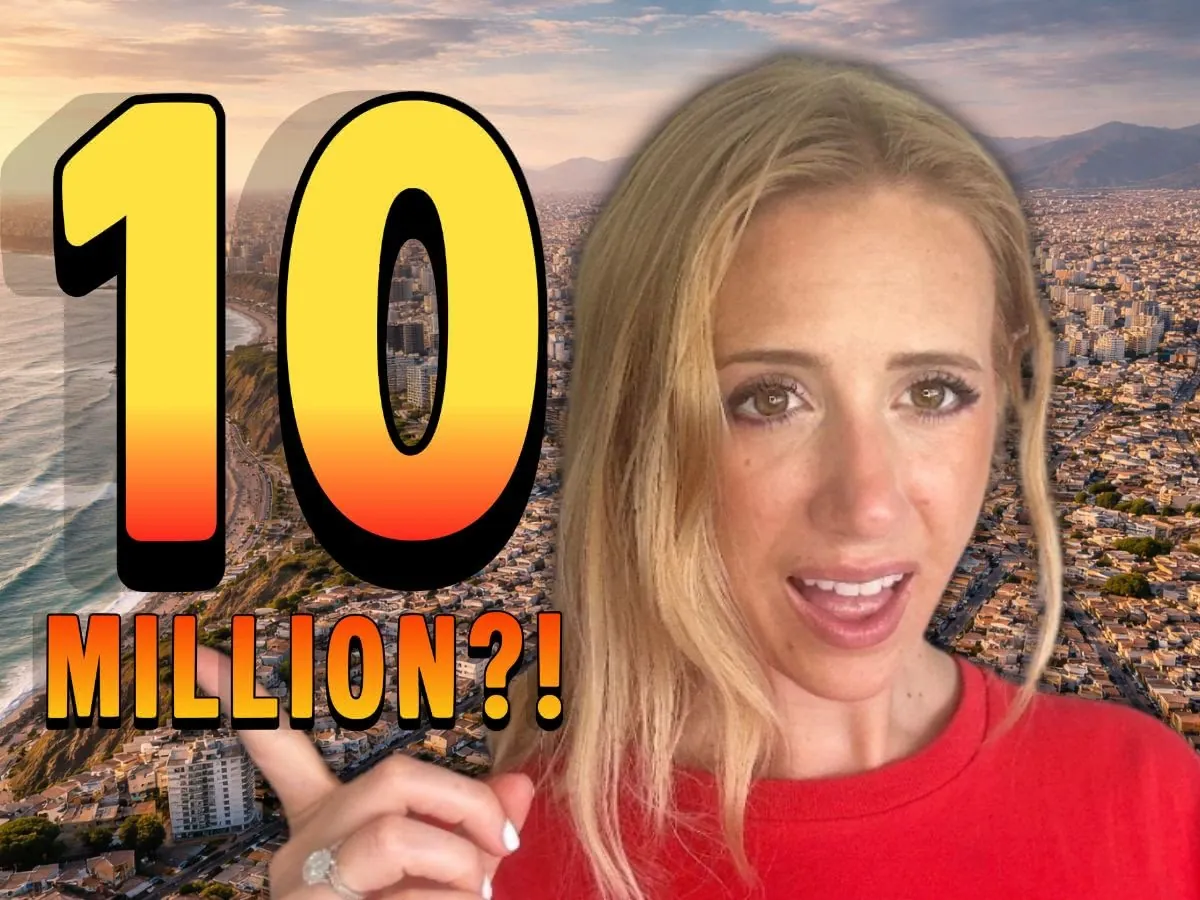
I remember the moment I first learned that the Lima population had crossed 10 million people. It didn’t match the mental image many outsiders have of Peru, a country known for mountains, jungle, and ancient ruins rather than massive urban sprawl. Yet today, Lima is one of the largest cities in South America, and roughly one out of every three Peruvians lives there.
That kind of concentration of a population does not happen by accident. Lima absorbed people, opportunity, government power, and national identity over centuries. To understand why Lima became so massive, you have to look at geography, migration, economics, and even periods of violence that reshaped the country.
Lima Population Overview

Today, the Lima population sits at just over 10.4 million people in the metropolitan area. That number alone makes Lima not just Peru’s largest city, but one of the most dominant urban centers anywhere in South America. Roughly 30% of Peru’s total population lives in Lima, a level of concentration that surprises many first-time visitors.
When people arrive, the scale feels overwhelming. District after district stretches along the coast, blending into neighboring areas without clear breaks.
Where Lima Is Located and Why Geography Matters

Lima sits in the valleys of the Chillón, Rímac, and Lurín rivers along Peru’s central coast. It faces the Pacific Ocean and connects directly to Callao, Peru’s primary seaport. That location gave Lima advantages from the very beginning especially in trade, communication, and national control.
Peru’s geography is dramatic but challenging. The Andes mountains cut through the country, while the Amazon rainforest spreads across the east, creating regions that are difficult to connect. Over time, Lima’s coastal position made it easier to build infrastructure and maintain connections with the outside world.
That geographic advantage still shapes the Lima population today. While other regions remained harder to access, Lima kept growing as Peru’s most connected urban center.
Why Lima Became Peru’s Primate City

From the earliest days of Spanish colonization, Peru developed around one dominant center instead of multiple competing cities and that center was Lima.
Founded in 1535, Lima quickly became the political and administrative capital of colonial Peru. Spanish authorities chose it over Cusco largely because of its coastal access, which made communication with Spain easier and more efficient. Over time, that early decision created a pattern where power stayed centralized.
This is what geographers call a primate city, a city that dominates its country economically, politically, and culturally. In Peru’s case, Lima became the country’s center.
Lima Population Growth in the 20th Century

For centuries, Lima grew slowly but steadily. The real population boom began during the mid-20th century, when Peru experienced major changes in transportation and national development.
Road construction connected remote regions to the capital, making migration more realistic for rural families. At the same time, industrialization created new jobs that simply didn’t exist in rural areas. Cities promised opportunity and Lima promised more of it than anywhere else.
Between 1940 and 1980, millions of people moved into Lima from across the country. That shift permanently transformed the Lima population, turning it into the massive urban center it is today.
Migration From the Andes and Amazon

One of the most powerful forces behind Lima’s growth was migration from Peru’s highland and jungle regions. Many families moved to Lima searching for work, education, and healthcare that were harder to access in rural areas.
People brought traditions, languages, food, and regional identities into the capital, reshaping the city’s cultural landscape. Lima became a mosaic of Peru itself.
Today, Lima feels like a crossroads of the entire country. Accents, customs, and regional influences mix together in ways that make the city feel less like a local center and more like a national one.
Terrorism and Internal Conflict in the 1980s–1990s

Another factor that accelerated Lima’s growth was Peru’s internal conflict during the 1980s and 1990s. Violent insurgent groups targeted rural communities, especially in the Andes, creating widespread instability and fear.
Hundreds of thousands of Peruvians were displaced during this period. Many moved toward Lima, where the government presence was stronger and safety was more accessible than in isolated rural areas. For some families, migration to Lima wasn’t about opportunity it was about survival.
The Lima population was already expanding, but the conflict intensified migration patterns that were already underway.
Lima Demographics Today
Modern Lima reflects the full diversity of Peru. The city includes residents with roots in the Andes, the Amazon, coastal towns, and international communities. In many ways, Lima functions as a national snapshot of Peru itself.
A large portion of Lima’s workforce operates within informal economic sectors. Street vendors, small businesses, and independent services play a visible role in daily life. That informality has allowed the city to absorb waves of migration that formal job markets alone might not have supported.
Despite its size, Lima continues to evolve. Districts expand outward, neighborhoods transform, and the metropolitan footprint grows year after year.
The Economy Behind Lima’s Growth
Lima became large because it concentrated opportunity. Government offices, financial institutions, universities, and major companies all centered themselves in the capital over time.
Jobs attracted people, people attracted businesses, and businesses created even more jobs. Over decades, Lima became Peru’s economic engine.
The presence of Callao, Peru’s primary port, reinforced this advantage. Most international trade flows through this region, strengthening Lima’s role as the country’s commercial heart.
Industry and Commerce in Lima
Lima’s economy is more diverse than many people expect. Industries include manufacturing, textiles, food processing, construction materials, and shipping operations. These sectors provided employment opportunities across different skill levels, making migration more sustainable.
Commerce thrives across every layer of the city. From modern shopping districts to neighborhood markets and informal street vendors, Lima supports economic activity at multiple scales. That flexibility has helped the city absorb population growth without completely collapsing under its own weight.
The result is a city that functions both formally and informally at the same time, a defining feature of the modern Lima population.
Administration and Social Conditions
As Peru’s capital, Lima houses national government institutions and administrative centers. That political presence has drawn public investment, infrastructure, and services into the city.
However, rapid growth has also created major challenges. Housing shortages, transportation congestion, and uneven access to services became part of Lima’s expansion story. Entire neighborhoods developed faster than urban planning could keep pace.
Still, the city adapted. Over time, many once-informal settlements transformed into established districts that are now fully integrated into Lima’s urban landscape.
Is Lima the Second Largest City in South America?
This is one of the most confusing claims about the Lima population, and it deserves clarification. Lima is absolutely one of the largest cities in South America, but calling it the second largest depends heavily on how population boundaries are measured.
When comparing metropolitan areas, cities like São Paulo, Buenos Aires, Rio de Janeiro, and Bogotá often rank ahead of Lima depending on the dataset. However, Lima remains Peru’s largest city by far and one of the most influential urban centers on the continent.
So while the ranking can shift depending on definitions, one fact remains constant, Lima is among South America’s most powerful and dominant cities.
Why Lima Feels Bigger Than Expected
For many outsiders, the size of the Lima population feels surprising at first. Peru is often associated with ancient civilizations, dramatic landscapes, and remote natural beauty rather than large urban cities. Yet Lima quietly grew into one of the largest cities on the continent through centuries of centralization.