
Sometimes you hear a word so often that it loses its real meaning. That was the case for me and pride. I had a million scenarios packed into my mind of what prideful people say and do… and I felt certain I wasn’t that.
How I Defined Pride
For me prideful people look down on others. They have a deep need to feel they are superior. They belittle you through criticism and downplay your strengths and gifts. They put a microscope on everything you do wrong while blatantly ignoring what you do right.
Around a prideful person, you have no credibility and no voice, because you are “beneath” them. They will use emotions and other people against you to keep you down in your place. They value being right over connection. Nothing is more important to them than their ego. They will rip connection apart if it means they come out “right” or “on top”.
This definition was formed through the pain of personal experience with this specific brand of blatant pride.
What Changed?
The topic of what pride could mean started to poke at me when I listened to the audiobook version of C.S. Lewis’s “The Screwtape Letters”.
The series is a dialogue between demons as they scheme to intervene in the lives of humans they are assigned. Their goal is to do whatever it takes to divert the human’s focus away from God and onto anything as simple as a sandwich to as complex as a war.
It touches on subtle forms of pride and peaked my awareness to my own potential blindspots.
During this time period I had an emotional disagreement with my partner. I was sure he was all wrong but we just couldn’t see eye to eye. I turned to YouTube to get my mind on other things and came across a video about how pride is the ultimate sin that separates us from God. It started in the garden of eden and defines satan’s goal of “being god”.
I realized this sin is powerful and can be subtle, so I went down a rabbit hole of digging into it. I found there are many brands of pride and some of them did hit home after all.
Why does it matter?
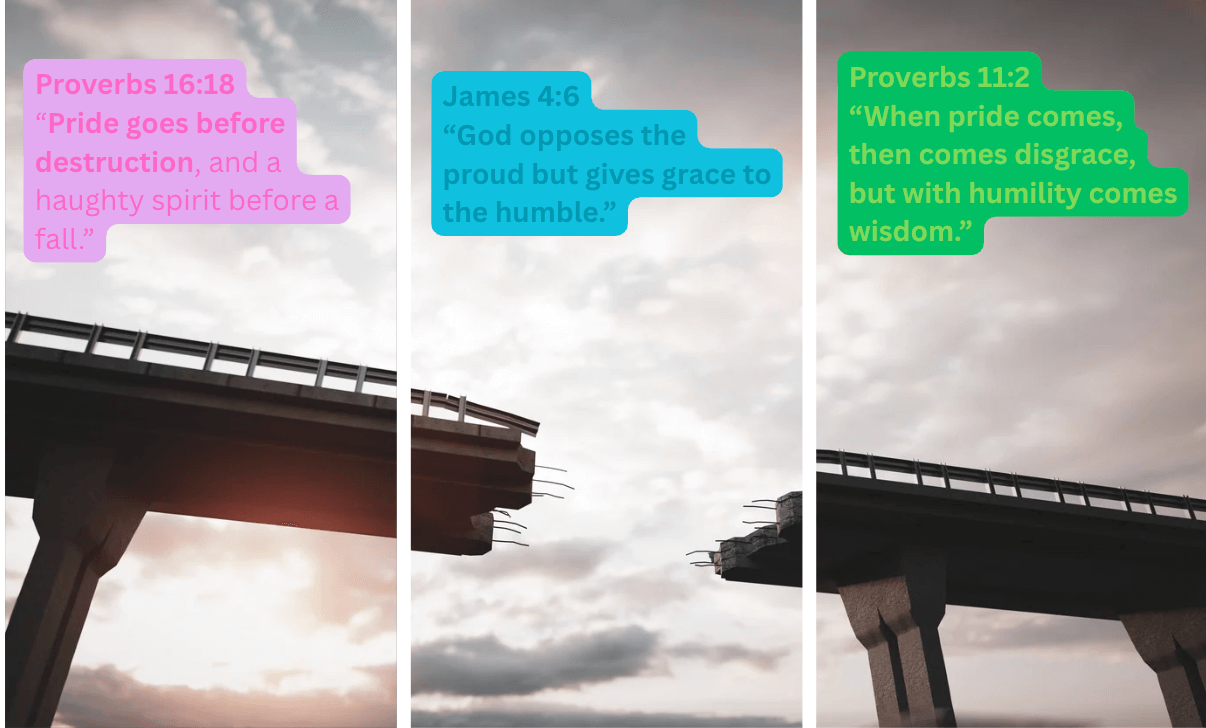
Pride destroys our relationship with God and others because it closes our hearts, blocks correction and repentance, elevates self above truth, and makes genuine connection, empathy, and repair impossible.
My personal flavor of pride wasn’t rooted in the need to feel superior to others like the prototype in my head was telling me. It was rooted in being self-protective, an emotionally intense pride that turns your hurt into certainty, makes your perspective feel like the only truth in the moment, and pushes you to defend yourself so strongly that it leaves little room for the other person’s experience.
I was afraid that if I didn’t defend myself, I’d get trampled. So I ended up hyper-focusing on my feelings and perception when I felt hurt, and didn’t give the other person the space to also have a voice, which only led to more arguing and hurt vs. resolution.
It wasn’t a fun conclusion to come to but in a way it was freeing, too, like fitting a piece into a puzzle.
The Five Categories
So maybe like me, you don’t relate to “superiority” pride (or maybe you do). Maybe you see yourself falling into self-sufficiency pride more, or defensive pride. No matter what type resonates with you the most, I think you will find it eye opening and like me, a bit freeing.
1. Superiority Pride
Definition: Exalting yourself above others; believing you are more righteous or more correct.
This is the pride that whispers, “I’m better than you,” or “I know more than you.” It shows up as comparing, judging, or quietly believing your way is the right way.
Symptoms:
• You think others are less disciplined, wise, or spiritual than you.
• You correct quickly but receive correction slowly.
• You feel secretly validated when others fail.
• You tend to criticize more than encourage.
• You feel irritated when others don’t meet your standards.
Pain That Triggers It:
• Fear of inadequacy
• Fear of being “less than”
• Insecurity about identity or worth
• Shame about weakness or failure
This pride says: “If I feel inferior, I will compensate by elevating myself.”
How to Combat It:
Choose deliberate humility by remembering that all gifts, wisdom, and strengths come from God, not yourself. Practice honoring others by seeking their perspective first and looking for ways to encourage rather than critique.
Proverbs 16:18
“Pride goes before destruction, and a haughty spirit before a fall.”
Story: The Pharisee and the Tax Collector (Luke 18:9–14).
A Pharisee strutted into prayer bragging about how good he was and comparing himself to the “pathetic” tax collector beside him. Jesus shocked everyone by saying the humble sinner was accepted by God and the proud man wasn’t.
2. Self-Sufficiency Pride
Definition: Living as though you need no one, not God, not guidance, not community.
This pride says, “I don’t need anyone,” and feels safer relying on yourself than being vulnerable. You’d rather push through alone than admit weakness or ask for help.
Symptoms:
• You struggle to admit you’re overwhelmed or lost.
• You keep your problems to yourself.
• You rarely ask for advice or support.
• You feel uncomfortable depending on others.
• You equate needing help with being weak.
Pain That Triggers It:
• Fear of dependence
• Fear of disappointment
• Fear of being let down emotionally
• Past abandonment or betrayal
• Lack of trustworthy support in life
This pride says: “I will never need anyone again so I can’t be hurt.”
How to Combat It:
Invite God and others into your struggles by admitting need, asking for help, and practicing dependence. Build humility through prayer, confession, and allowing trusted people to support, advise, and speak into your life.
John 15:5
“I am the vine; you are the branches. Whoever abides in Me and I in him, he it is that bears much fruit, for apart from Me you can do nothing.”
Revelation 3:17
“For you say, ‘I am rich, I have prospered, and I need nothing,’ not realizing that you are wretched, pitiable, poor, blind, and naked.”
Story: Nebuchadnezzar (Daniel 4).
Nebuchadnezzar looked over his empire and said, “I built all of this myself,” taking full credit for what God had given. God humbled him until he finally admitted that every kingdom and every breath ultimately come from Him.
3. Defensive Pride
Definition: Rejecting correction, refusing responsibility, and protecting yourself from any suggestion of wrongdoing.
This pride reacts with, “I didn’t do anything wrong!” the moment you feel criticized. It’s not about arrogance, it’s about protecting yourself from feeling exposed or inadequate.
Symptoms:
• You justify yourself before listening fully.
• You immediately explain, defend, or counterattack.
• You feel personally attacked even when feedback is gentle.
• You struggle to say, “I was wrong.”
• You blame circumstances or others to ease discomfort.
Pain That Triggers It:
• Fear of being wrong
• Fear of being exposed or shamed
• Pain from past criticism
• Low tolerance for vulnerability
• Fear of disappointing others
This pride says: “I must protect myself from being seen as flawed.”
How to Combat It:
Pause before reacting, listen fully, and acknowledge truth in what’s being said even if it’s uncomfortable. Say, “Help me understand,” and intentionally own your part quickly to break the reflex to justify and self-protect.
Proverbs 12:15
“The way of a fool is right in his own eyes, but a wise man listens to advice.”
Proverbs 12:1
“Whoever loves discipline loves knowledge, but he who hates reproof is stupid.”
Story: King Saul (1 Samuel 15).
When Saul messed up and God called him out, he panicked, blamed his men, twisted the truth, and defended himself instead of owning it. His refusal to admit wrong cost him his crown because God couldn’t work with a closed, defensive heart.
4. Vanity Pride (Image Over Integrity)
Definition: Prioritizing appearance, reputation, and looking “right” over truth and inner humility.
This pride cares deeply about how you appear, spiritually, socially, or emotionally. It wants to be seen as strong, capable, put-together, or “right,” even when the inside doesn’t match.
Symptoms:
• You hide flaws or mistakes so others won’t think less of you.
• You avoid apologizing because it feels humiliating.
• You care more about looking okay than being honest.
• You fear being seen as weak, emotional, or wrong.
• You maintain a polished front even when your heart is struggling.
Pain That Triggers It:
• Fear of rejection
• Fear of being seen as weak
• Fear of judgment
• Fear of losing reputation or status
This pride says: “I must look good so no one sees the real, imperfect me.”
How to Combat It:
Choose authenticity over appearance by admitting mistakes openly and resisting the urge to “look perfect.” Practice confession, honest conversations, and vulnerability; let integrity matter more than how you’re perceived.
1 Samuel 16:7
“For the Lord sees not as man sees: man looks on the outward appearance, but the Lord looks on the heart.”
Matthew 23:5
“They do all their deeds to be seen by others.”
Story: The Pharisees (Matthew 23).
The Pharisees lived for applause, looking holy on the outside while hiding pride and hypocrisy on the inside. Jesus exposed them, saying they were like beautifully painted tombs, impressive on the surface, empty underneath.
5. Emotional Pride
Definition: Treating your emotions as truth and resisting other perspectives when feelings are intense.
This pride subconsciously treats emotion as truth: “If I feel it strongly, it must be right.” Your inner experience becomes the lens through which you interpret everything, even God.
Symptoms:
• Your emotions feel like facts in the moment.
• You struggle to see someone else’s perspective during conflict.
• Hurt turns into certainty that the other person is wrong.
• You react before fully understanding the situation.
• You assume intention based on how something made you feel.
Pain That Triggers It:
• Fear of invalidation
• Fear of not being heard or understood
• Past experiences of emotional neglect
• Fear of abandonment
• Sensitivity to perceived rejection
This pride says: “My feelings must be the truth because I cannot bear them being dismissed.”
How to Combat It:
Validate your feelings without treating them as absolute truth, pause to ask, “What else might be happening here?” Invite God’s perspective and others’ input before reacting, allowing clarity and empathy to temper emotional intensity.
Jeremiah 17:9
“The heart is deceitful above all things, and desperately sick; who can understand it?”
Proverbs 29:11
“A fool gives full vent to his spirit, but a wise man quietly holds it back.”
Story: Jonah.
Jonah was so furious that God forgave people he didn’t like that he treated his emotions as the whole truth and shut out God’s heart. God asked him, “Is your anger really justified?” showing how feelings can mislead us when pride takes over.
Takeaway
Identifying the type of pride that you’re struggling with is the first step in breaking free from it.
No responses yet